
A training ground for different opinions
A new way to bring all your students into conversation safely on topics where opinions differ.
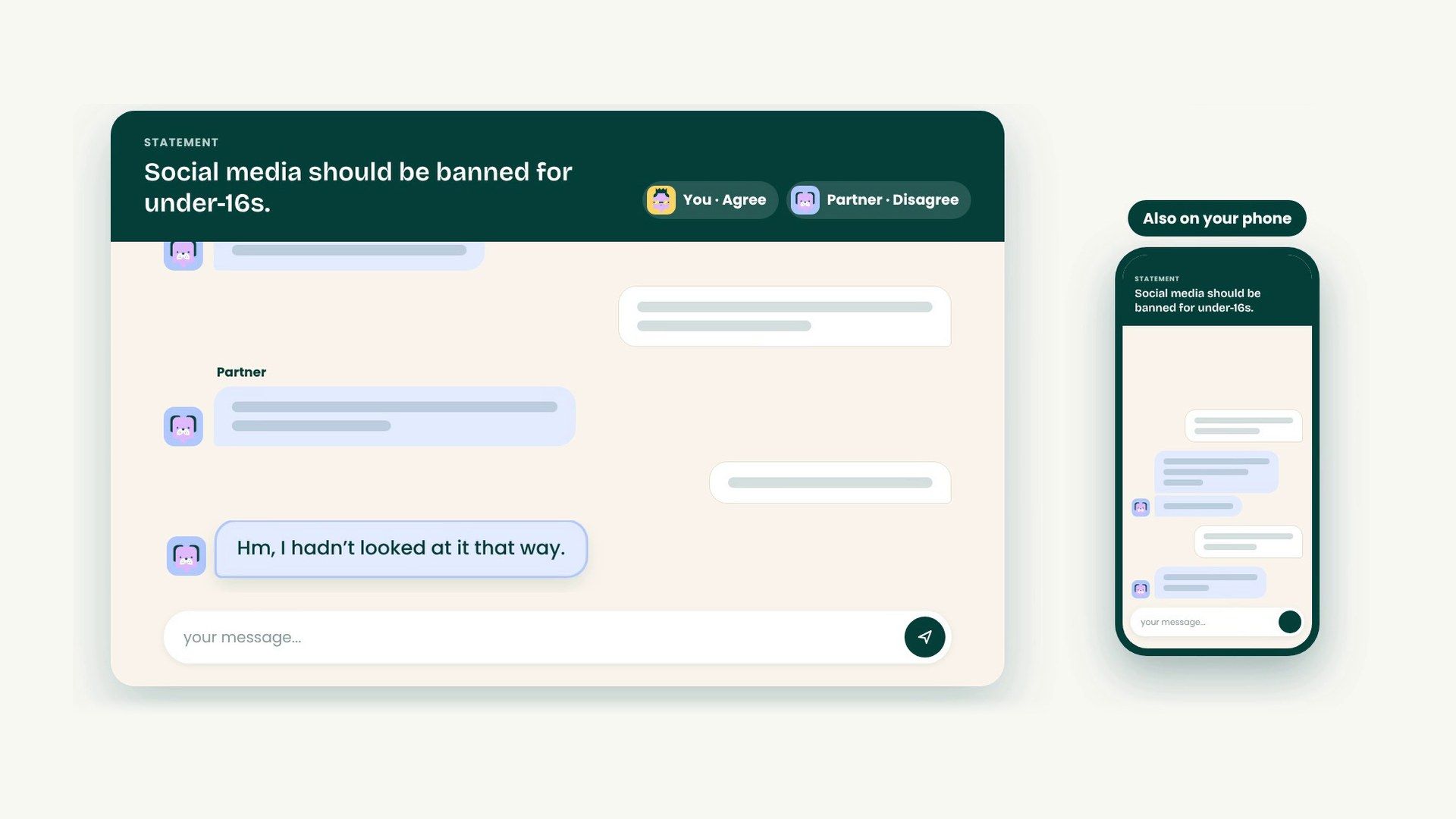
It’s that simple
- ± 15 min, beforehand
Choose statements
Choose 6–8 thought-provoking statements on your own topic. You decide what students talk about. Optionally add survey questions to gather extra information.
- ± 20 min, in class
Civinc session
You share the login code and students respond to the statements. Everyone is matched with a partner who has a different perspective and chats anonymously in pairs.
- as long as you like
Debrief
You see straight away how the group thinks and which arguments were in play. Use that to dig deeper with the group, or as inspiration for your next class or assignment.
- 20 or more students, with a phone or laptop
- About 20 minutes of your lecture or seminar
- A free Civinc Edu admin account. Create one
- Accounts for students: the login code is enough
- Budget: Civinc is free for hbo and wo
- Experience: just as easy as Mentimeter or Kahoot







What you get
A group discussion is often dominated by a few outspoken students. With Civinc everyone contributes equally, including the ‘silent majority’.
Students with different opinions talk to each other safely, without peer pressure or social desirability. Studies show that this leads to honest conversations and more mutual understanding.
See the researchIn no time you see how students view the topic, and which arguments and ideas are in play. You use these insights to dig deeper together afterwards, and/or as inspiration for a next class or assignment.
View a sample report
Where Civinc is used
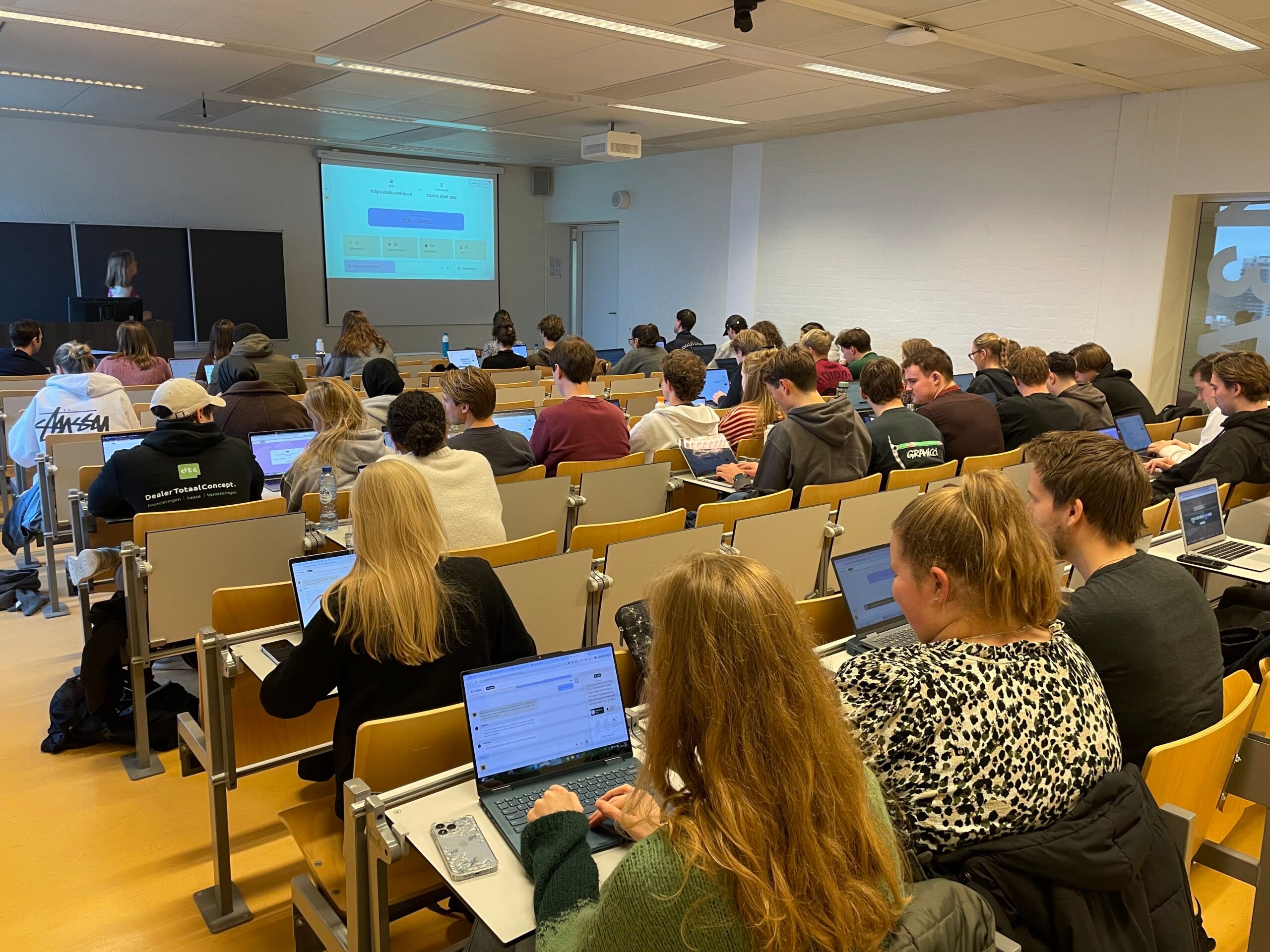
“Even those who rarely raise their hand were actively expressing their views and genuinely engaging with different perspectives.”
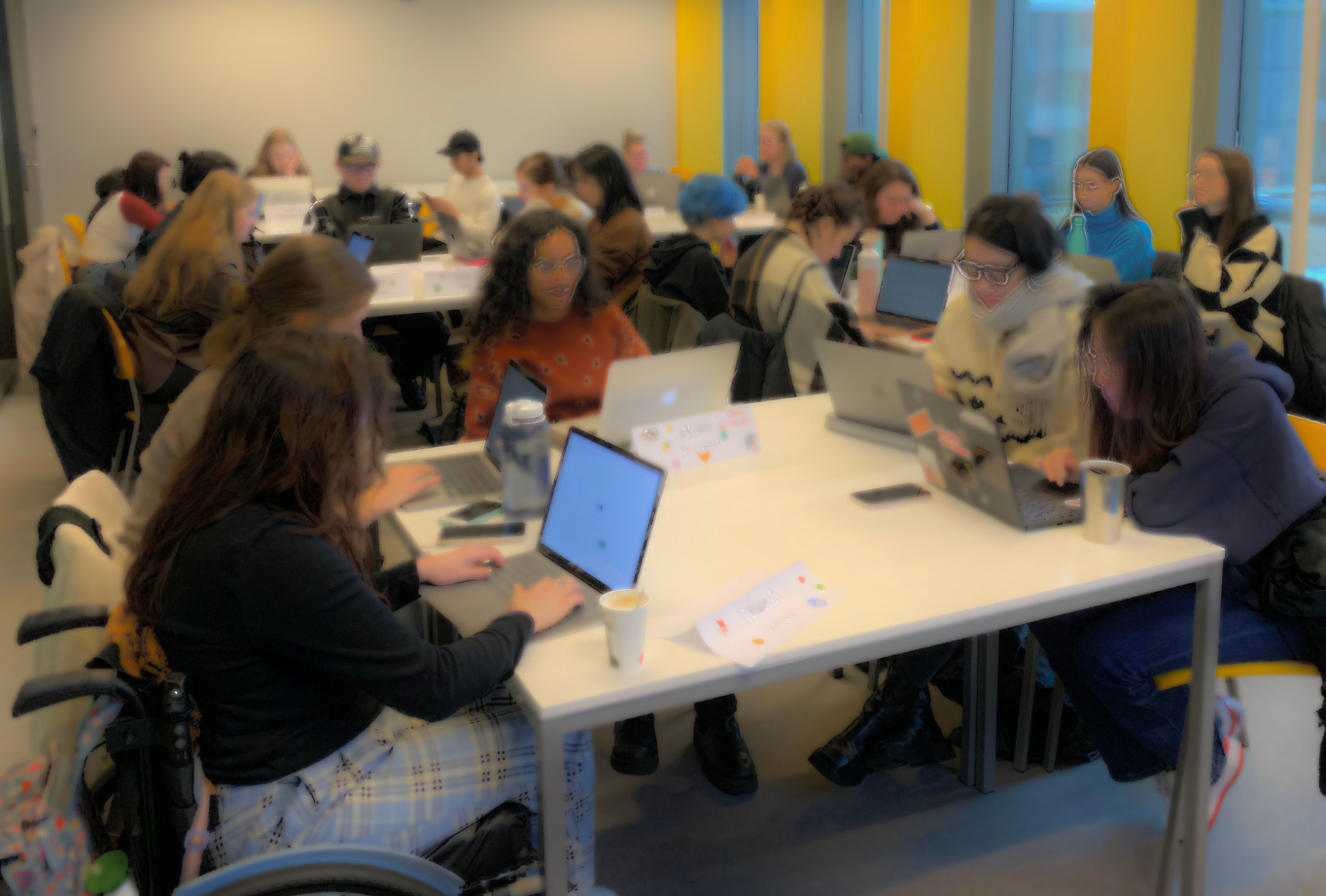
“It has shown me and our students that people can engage in meaningful and respectful discussions even when opinions differ.”
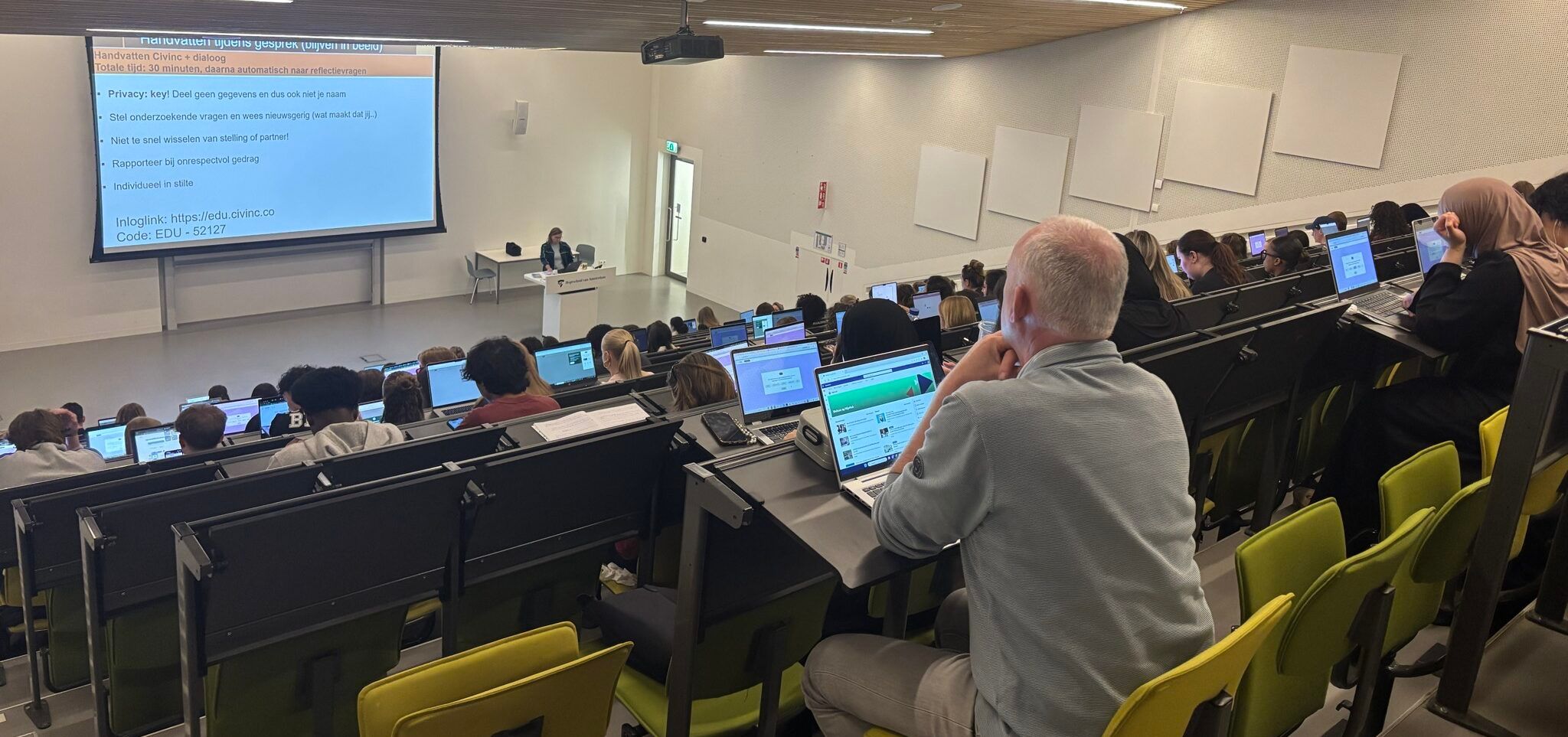
“It was precisely the anonymity that was appreciated by students; they indicated that they liked to enter into a conversation without any form of bias and assessment.”
Often asked: doesn’t anonymous chatting get out of hand?
Students chat one-on-one, without an audience, about a statement you have chosen. Without a name and without spectators, the reason to provoke disappears, and a difference of opinion becomes a starting point for a real conversation. That makes it very different from the toxic dynamics you often see on other social media, or the joker who puts odd texts on the screen in a word cloud.
It rarely happens, but if a conversation is unpleasant, participants can report it at any time and look for a different partner straight away. You are clicked away immediately if you misbehave.
That is also why research at Utrecht University shows that students on average feel very safe, that the conversations are about substance and that mutual understanding increases.
What students say
Anonymous reactions after a session.
Reading what the other person thought made me think and sometimes I changed my mind.
It’s really nice that you’re anonymous, because even if your opinion isn’t extreme, it still gives you a safer feeling.
I’m normally always afraid that I’ll say something wrong. This way a middle ground can be found.
I really enjoyed seeing both sides this way and being curious about each other.
Privacy and accessibility come first
- Anonymous participationThe chats cannot be viewed by the teacher.
- Processed in the EUData does not leave the European Union.
- AI analysis is optionalThe insights can never be traced back to individuals, and the data does not train models. Read how we use AI from Europe’s Mistral
- Multiple languagesWith automatic translation in the chat.
- AccessibilityWorks with screen readers.
- In person, hybrid or onlineIn a lecture, parallel seminars or online.
Free now.
Free later.
Civinc is 100% free for teachers in Dutch higher education (hbo and wo). That is possible thanks to the support of the Francisca Foundation for Freedom of Thought.
Get started in 3 steps
- 1Create an account
- 2Choose your statements
- 3Share the login code and start
Need guidance, or do you work in mbo, secondary education or research? Email hello@civinc.co
Frequently asked questions
Can’t find your question? Email hello@civinc.co
What does Civinc cost?
Nothing. Civinc is 100% free for teachers in Dutch higher education (hbo and wo), now and in the future. No strings attached, no data being sold, no invoice afterwards. That is possible thanks to the support of the Francisca Foundation for Freedom of Thought.
How many students do I need?
A session works from 20 students: in a lecture, in parallel seminars or online. There is no maximum.
Do students need to create an account?
No. Students join with a login code on their own phone or laptop and remain anonymous.
What insights do I get after a session?
For each statement you see how the group thinks, with the main arguments and ideas. Afterwards a report is ready for you as a PDF. View a sample report
How is privacy arranged?
Students take part anonymously, data is processed in the EU and the AI analysis is optional. Read here how we handle privacy and AI, or watch this video.
Can I use Civinc in multiple languages?
Yes. You can set up a Civinc session in Dutch and/or English. In the chat itself, automatic translation is available in almost any language, so students can always communicate in the language they are most comfortable in.
Shouldn’t we have these conversations face to face?
Absolutely. In practice, though, it is hard to let everyone contribute equally and safely in a face-to-face conversation. We need to consciously create room for that, which is why Civinc doesn’t replace that conversation: a session is a stepping stone that lays the groundwork for a deeper discussion afterwards.
What do studies say about the impact of Civinc?
The impact of Civinc has been researched extensively in different settings, with clear findings. Studies show that Civinc’s short (one-off) anonymous one-on-one chats have a depolarising effect, help build (self-reported) dialogue skills, boost participants’ confidence and increase openness towards people with different views. In addition, a large share of participants say they feel safer sharing their authentic opinion than in a group setting. And the nice thing is: you can test this yourself by adding survey questions at the end of your Civinc sessions to ask participants about their experience. For more information, see our research page.
Can I use Civinc for research purposes?
Let’s talk! Civinc is regularly used for research and lends itself well to a new type of data collection, combining the anonymous chats, the responses to statements and the input on survey questions. Get in touch via hello@civinc.co to see how we can help.