
University of Amsterdam (Communication)
"Civinc has proven to be a valuable platform in our teaching of courses that tackle controversial issues. It has shown me and our students that people can engage in meaningful and respectful discussions even when opinions differ."
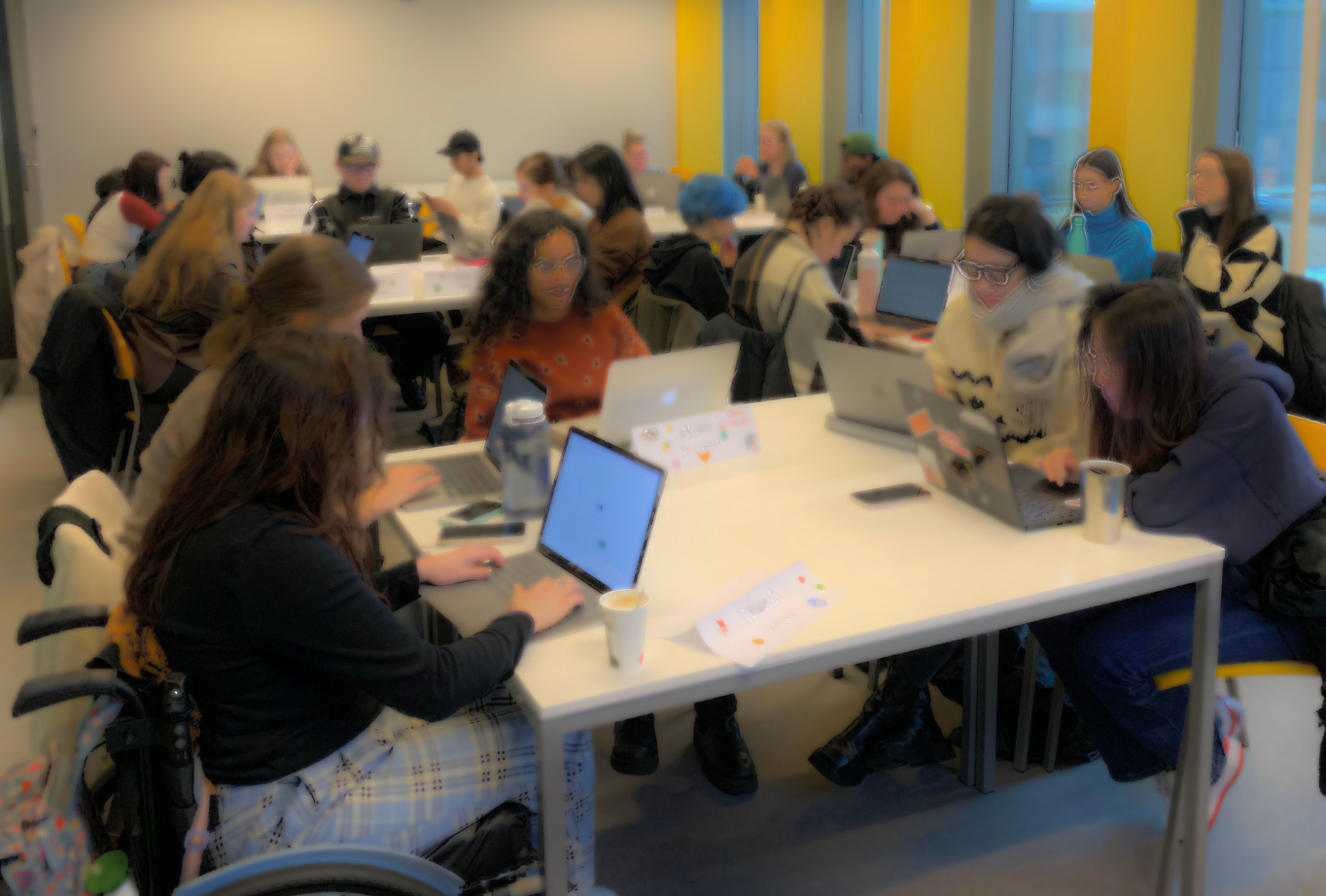
Dr. Chei Billedo, on the use of Civinc in her teaching:
"Civinc has proven to be a valuable platform in our teaching of courses that tackle controversial issues. It has shown me and our students that people can engage in meaningful and respectful discussions even when opinions differ. The anonymity feature provides students with a safe space to express themselves and interact with others without preconceived judgments. We have come to appreciate the platform’s ability to foster respectful, open dialogue and its potential to uncover common ground. Civinc promotes understanding and collaboration in our learning environment. Overall, my experience with Civinc has been profoundly enriching."
Civinc at the University of AmsterdamWithin the Department of Communication Science at the University of Amsterdam, education is becoming increasingly interactive and focused on stimulating critical thinking among students, especially around complex topics like disinformation and polarization. Civinc aligns seamlessly with this aim as a teaching tool to involve students with diverse perspectives in inclusive discussions. That's why Civinc is used in courses like "Representation in the Media" and "Psychology of Misinformation."
How Civinc is used
The teacher starts a Civinc session by sharing a log-in code with students, similar to apps such as Mentimeter or Kahoot. During the session, all students will be matched in anonymous one-on-one chats with a peer that holds different views on thought-provoking statements relevant to the course topic. For example, discussion statements in the context of Communication courses may look like the following:
"News media consistently reproduce more stereotypes than they break down." "Commercial media have no moral obligation to improve representation." "Misinformation is a social problem, not an information problem."
After the Civic session, a data analysis provides the teacher with instant insights into the prevailing arguments and sentiments within the group. These insights are then used as a starting point for a classroom reflection, in which students are guided to delve deeper into the experience and outcomes, and the follow up questions they provoke. Want to understand exactly how Civinc works? Check out our 2-minute explainer video!
More cases
View all cases → EducationUniversiteit UtrechtRead more about the large-scale use of Civinc amongst 800+ university students, and the promising outcomes research into its impact that was conducted by Utrecht University.Read the case →
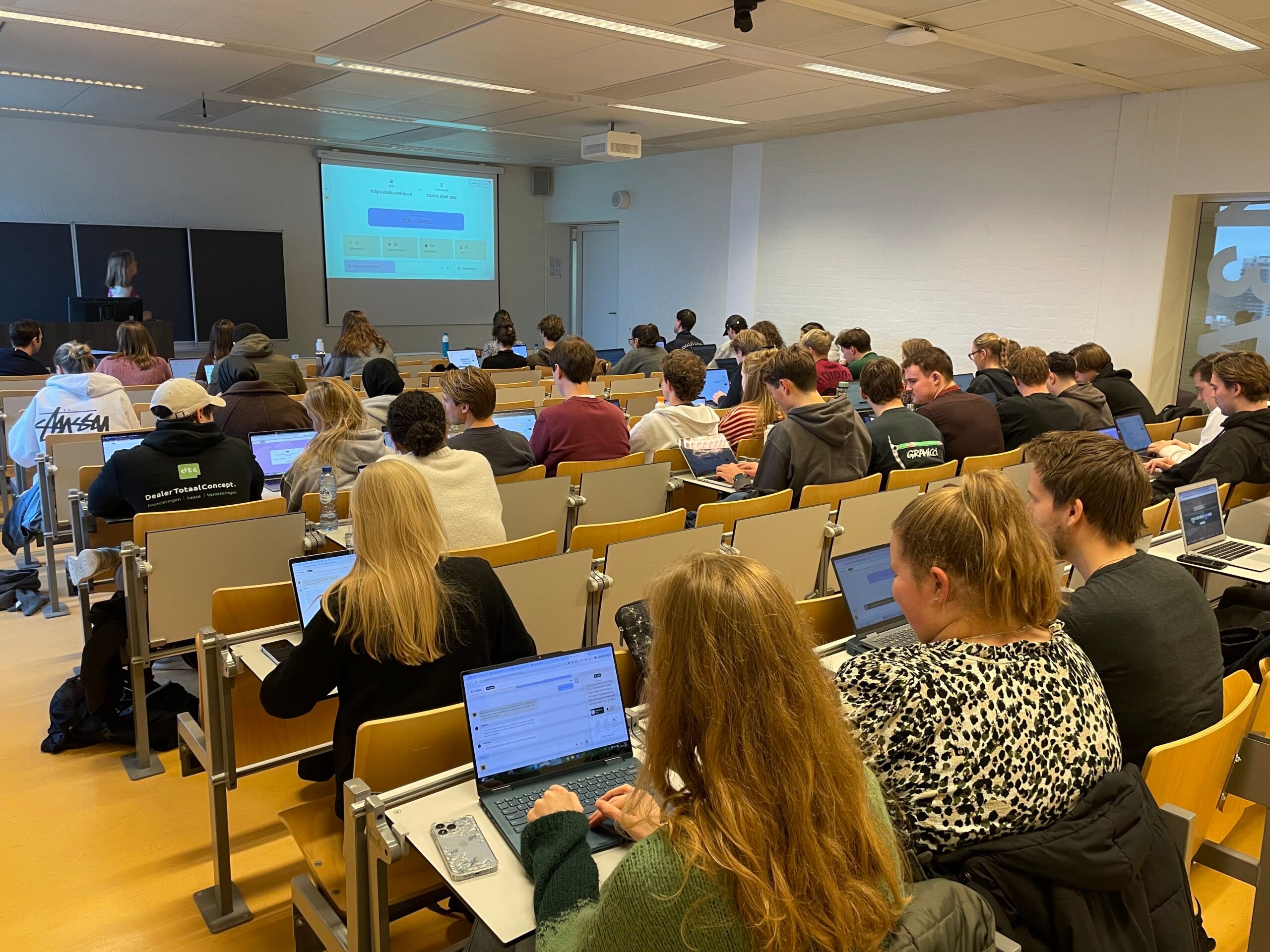 EducationVrije Universiteit"Using Civinc in my class proved to be an excellent way to involve all students in open and honest discussion. Even those who rarely raise their hand were actively expressing their views and genuinely engaging with different perspectives. Students reported that they really valued this."Read the case →
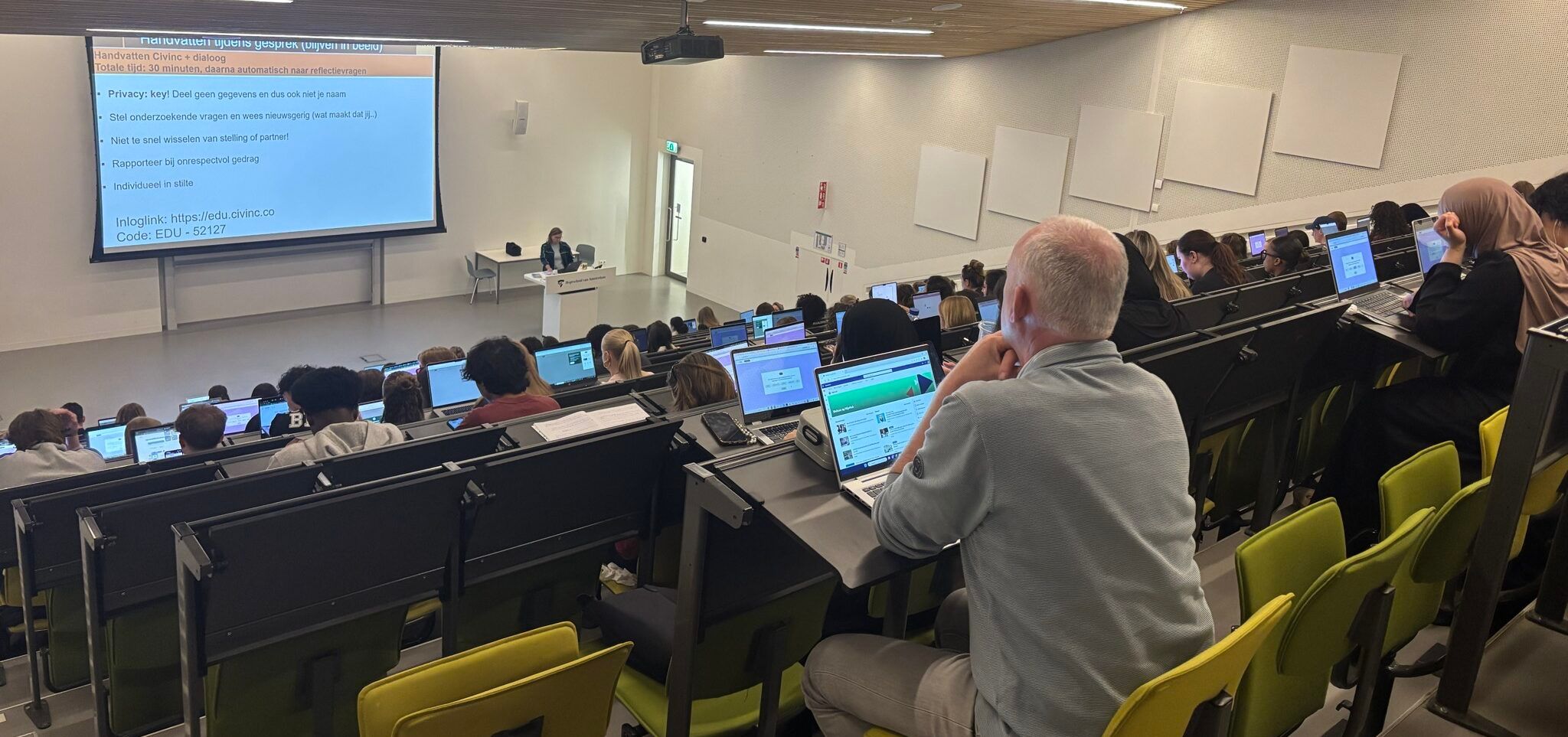 EducationHogeschool van Amsterdam"The platform is very user-friendly and encourages students to explore the views of a fellow student with a curious eye. It was precisely the anonymity that was appreciated by students; They indicated that they liked to enter into a conversation without any form of bias and assessment"Read the case →
Free now.
Free later.
Civinc is 100% free for teachers in Dutch higher education (hbo and wo). That is possible thanks to the support of the Francisca Foundation for Freedom of Thought.
Create a free accountGet started in 3 steps
- 1Create an account
- 2Choose your statements
- 3Share the login code and start
Need guidance, or do you work in mbo, secondary education or research? Email hello@civinc.co